

Rome Family Travel: What to See, Eat and Know in 4 Days
Rome is one of those cities where you could spend weeks and still have more to see. We had four days – including our arrival day – at the beginning of our month-long family trip through Italy. For the entire Italy itinerary, check out this post. It wasn’t enough to see everything, but it was enough to fall in love with the city and learn a few things about how we’d approach Rome differently next time.
Travelling as a group of seven, with teenagers in tow, during a summer heat wave definitely shaped our experience. We quickly learned that early mornings were our friend, afternoons were for slowing down, and some of our best food discoveries came from simply asking locals where they liked to eat.
Here’s how we spent four days in Rome – and what we’d recommend doing differently.
Quick note: Some of the links below are affiliates, the thoughts and opinions are all my own. I’m always excited to share my favourite things with you, save you money when I can, and in so doing may collect a small commission at no cost to you. It’s a great way that you can support my blog.
Getting to Rome: One airport, one less headache
Because we were flying from Canada, we chose to fly in and out of Rome. It ended up being cheaper to have a return ticket from the same airport, even though we were travelling around Italy for an entire month. At the end of our trip, we simply took the train back to Rome.
It’s worth comparing the total cost before assuming an open-jaw ticket is the better option. For us, flying in and out of Rome made sense.
We also booked our airport transfers ahead of time with Welcome Pickups. With seven people and luggage, a private minivan often cost about the same as public transportation – and after a long flight, having someone waiting for us was worth it.
One thing we hadn’t anticipated was how long our arrival would take. The new European Entry/Exit System (EES) meant our arrival process took more than an hour longer than expected. We were starting to worry about meeting our driver, but fortunately everything worked out.
Tip: If you’re travelling to Europe in 2026, build extra time into your arrival plans. Don’t schedule a tight airport transfer or connecting train.
Where we’d stay next time
We stayed in the residential neighbourhood of Monti Parioli, which we really enjoyed. It felt more like living in Rome than staying in the middle of the tourist district.
The downside was location.
We spent more time travelling back and forth to the main sights and ended up paying for taxis, which added up quickly with seven people. We also weren’t as likely to head back into the city after returning to our accommodation for an afternoon break.
If I were planning another short visit to Rome, I’d stay more centrally.
When you only have four days, being able to walk to dinner, grab a gelato or return to your accommodation when you’ve had enough of the heat is incredibly valuable.
Four Days in Rome
Day 1: The Colosseum
After arriving and settling in, we kept our first day fairly manageable. Jet lag and a heat wave weren’t exactly encouraging us to hit the ground running.
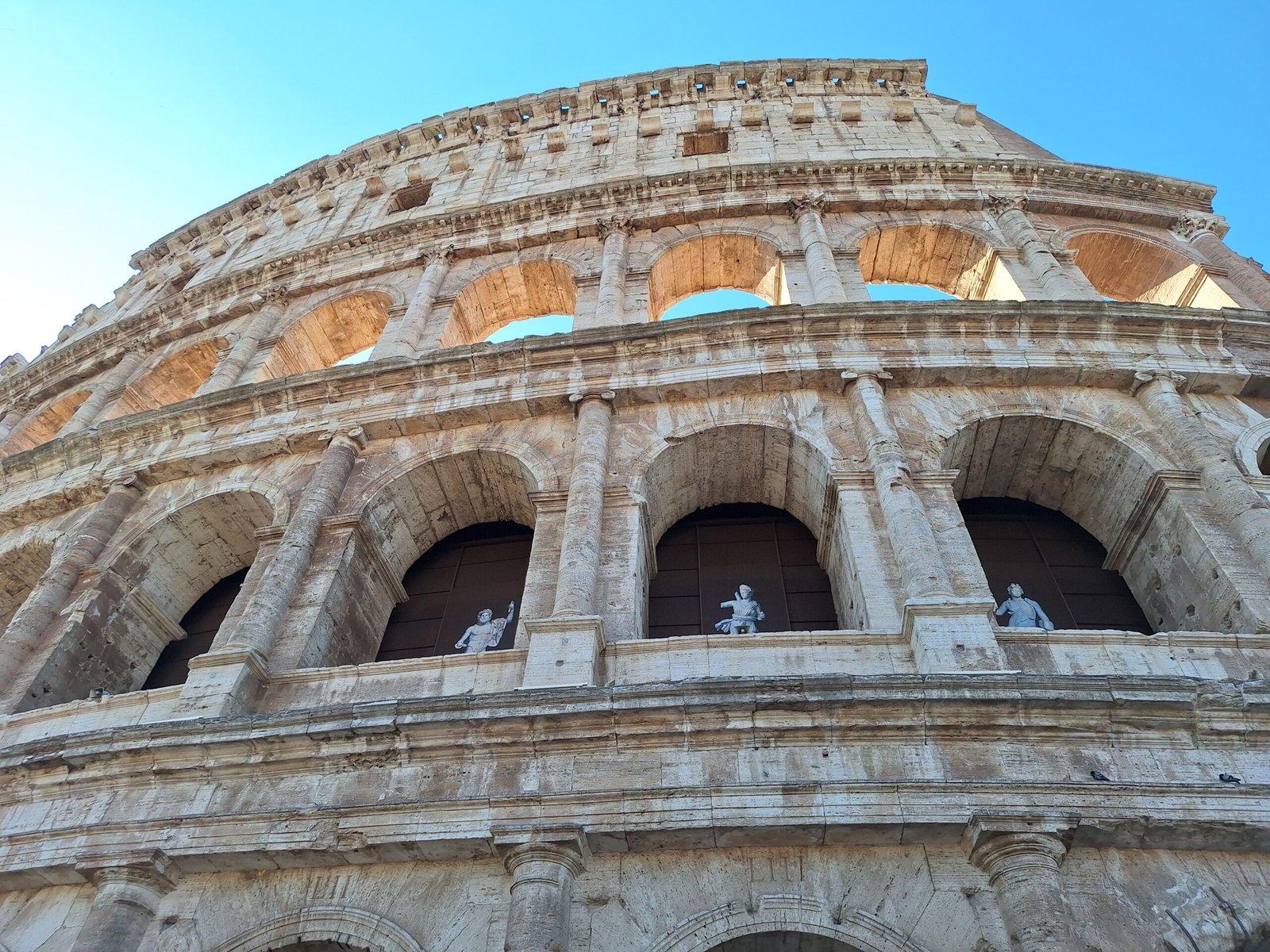
Our first major activity was the Colosseum, and it was one of the highlights of our entire trip.
My daughter had wanted to visit the area where the gladiators would have walked, so we booked an underground and arena tour. The guided experience gave us access to areas that general admission doesn’t include, and our guide brought the history to life with stories and context that we wouldn’t have had exploring on our own.
We also arrived early – before our tour began – and this turned out to be one of our best decisions.
The exterior was much quieter, giving us time to walk around, take photos and appreciate the building before the crowds arrived. Once the day warmed up and the crowds grew, we were very happy to have been there early.
There isn’t much shade around the Colosseum, so during a summer heat wave, an early start makes a huge difference.
Our ticket also included the Roman Forum and Palatine Hill. In cooler weather, I would have loved to explore them properly, but after our Colosseum tour, we were hot and tired. I would have been perfectly happy to save the Forum for another trip.


Book the big attractions early – but check the official sites
We initially booked refundable tickets through Get Your Guide for both the Colosseum and Vatican Museums. These were two things we absolutely did not want to miss, so we wanted a backup.
Then we started watching the official websites. We eventually managed to get tickets directly through the venues, saving a substantial amount compared with the third-party bookings.
For the Colosseum, we weren’t successful when tickets first became available about a month ahead. Then, a week or two before our visit, additional tickets appeared and we were able to book a smaller guided group.
Our experience was a good reminder that it can be worth checking back rather than assuming sold-out means sold-out.
Day 2: Vatican City
The next morning we were up early again for the Vatican Museums.
I’ll admit this was a surprise for me. I expected to enjoy the Vatican, but I enjoyed it much more than I thought I would.


First, Vatican City is enormous – much bigger than I had imagined.
We were incredibly lucky to get a guided tour for just our group of seven. Having a guide made a huge difference. Rather than simply walking from room to room, we had someone explaining what we were seeing, pointing out details and taking us to viewpoints and little features we almost certainly would have missed on our own.
The Sistine Chapel was spectacular, of course, but it wasn’t necessarily my highlight. It was incredibly crowded, and the experience was more about moving through a very full room while trying to take in the ceiling.
The galleries and rooms leading up to it were what really captured me.
After our tour, we walked over to St. Peter’s Basilica and explored the surrounding area before finding somewhere for a drink and snack. By midday, we were ready for an afternoon break.
That became our rhythm in Rome: early sightseeing, then slow down when the heat peaked.


Day 3: Our self-guided Rome walking tour
For our third day, we created our own walking tour, connecting the places we wanted to see rather than joining a group.
We started at the Trevi Fountain before 7 a.m.
It was still busy, but nothing like the crowds we saw later in the day. We could take photos and actually enjoy the fountain before heading off for croissants at L’Antico Forno di Fontana di Trevi.
From there, we walked towards the Altar of the Fatherland, Trajan’s Column and the Pantheon, where we waited for the 9 a.m. opening so we could go inside and see the famous oculus.
Travelling with teenagers means that not every stop has to be ancient history.


We visited a Lego store, found a Pokemon store and bought Italian Pokemon cards. We walked across bridges, passed the Supreme Court and simply wandered through the city.
And we asked locals for recommendations.
At one shop, we asked where we could find a great sandwich. They sent us to Mastrogusto, a small local spot with an impressive selection of panini. Our seasonal fig and prosciutto sandwich was fantastic.
That is something we did repeatedly throughout Italy: ask locals where they eat.
We continued towards the Spanish Steps, stopping for drinks and gelato along the way. The Spanish Steps weren’t necessarily a must-see for me, but since we were nearby, we walked to the top and enjoyed the views. We also stopped to cool off at a very fancy McDonald’s.
Family travel isn’t about making everyone love every attraction. Sometimes the Italian Pokemon cards are just as important as the Pantheon.


Day 4: Villa Borghese and slowing down
By our final day, we had learned something important: we didn’t need to rush.
We spent time exploring Villa Borghese, one of Rome’s enormous green spaces. The park includes gardens, fountains, monuments, museums, open spaces and a lake where you can rent small boats.
We actually returned two evenings because it was close to where we were staying.
As the temperature dropped, we’d wander through the gardens, we took a rowboat out on a pond, stopped for a drink and simply enjoyed being outside without feeling like we had to check another attraction off the list.
It was a completely different side of Rome – and one of the places I would recommend building into your trip, particularly if you are travelling with kids or teenagers.


A few Rome food favourites
Rome is obviously a food destination, and we tried plenty of things, but a few places stood out.
Gelateria Torcè became an immediate favourite. We went twice.
One of our unofficial gelato rules became: look for the metal tubs rather than the huge, brightly coloured displays of gelato.
Pizza Forum was another standout. It was air-conditioned – which mattered enormously during a heat wave – and served what may have been the best pizza I’ve ever eaten following our tour of the Colosseum. We asked our waiter for a recommendation and ended up with pizza topped with artichoke cream and prosciutto.
Once again, asking won.


What we learned in Rome
After four days, our biggest lessons were pretty simple.
- Go early. You’ll beat some of the crowds and the worst of the heat.
- Book major attractions ahead. Then check the official websites again before your trip in case additional tickets are released.
- Stay centrally. If you only have a few days, walkability is worth paying for.
- Plan around the heat. Morning sightseeing followed by an afternoon break worked extremely well for us.
- Use guides selectively. We didn’t want to spend hours walking around Rome with a group in the heat, but our Colosseum and Vatican guides added enormous value.
- Ask locals. Some of our best meals came from recommendations rather than research.
- Use washrooms when you find them. Public washrooms weren’t always easy to locate, and some require a small fee.
- Visit grocery stores. We love wandering through local supermarkets and trying specialties from the region we’re visiting.
- Leave room to wander. Some of our favourite moments weren’t planned at all.
Rome isn’t a city you can conquer in four days, and we didn’t try.
We saw the Colosseum, explored Vatican City, stood beneath the Pantheon’s oculus, tossed coins at the Trevi Fountain, ate incredible pizza and gelato, explored gardens, hunted down Italian Pokemon cards and asked strangers where to find the best sandwich.
Most importantly, we left feeling like we’d experienced a little bit of Rome rather than simply checking the city off our list.
And that’s always the goal of an adventure.
One last stop before flying home
A month later, Rome became our ending point too.
After travelling through Puglia, the Amalfi Coast, Ischia, Florence, Tuscany and Venice, we took the train back to Rome and used Welcome Pickups again – this time from the train station to our airport hotel.
We stayed at Hotel Isola Sacra Rome Airport, about 25 minutes from Rome, and it was a lovely way to end a month of travelling. A pool, breakfast and an airport shuttle meant that our final evening was about relaxing rather than worrying about making a morning flight.


Sometimes the best travel decision is the one that makes the end of the trip easy. For more on Italy, enjoy these posts.


You must be logged in to post a comment.