
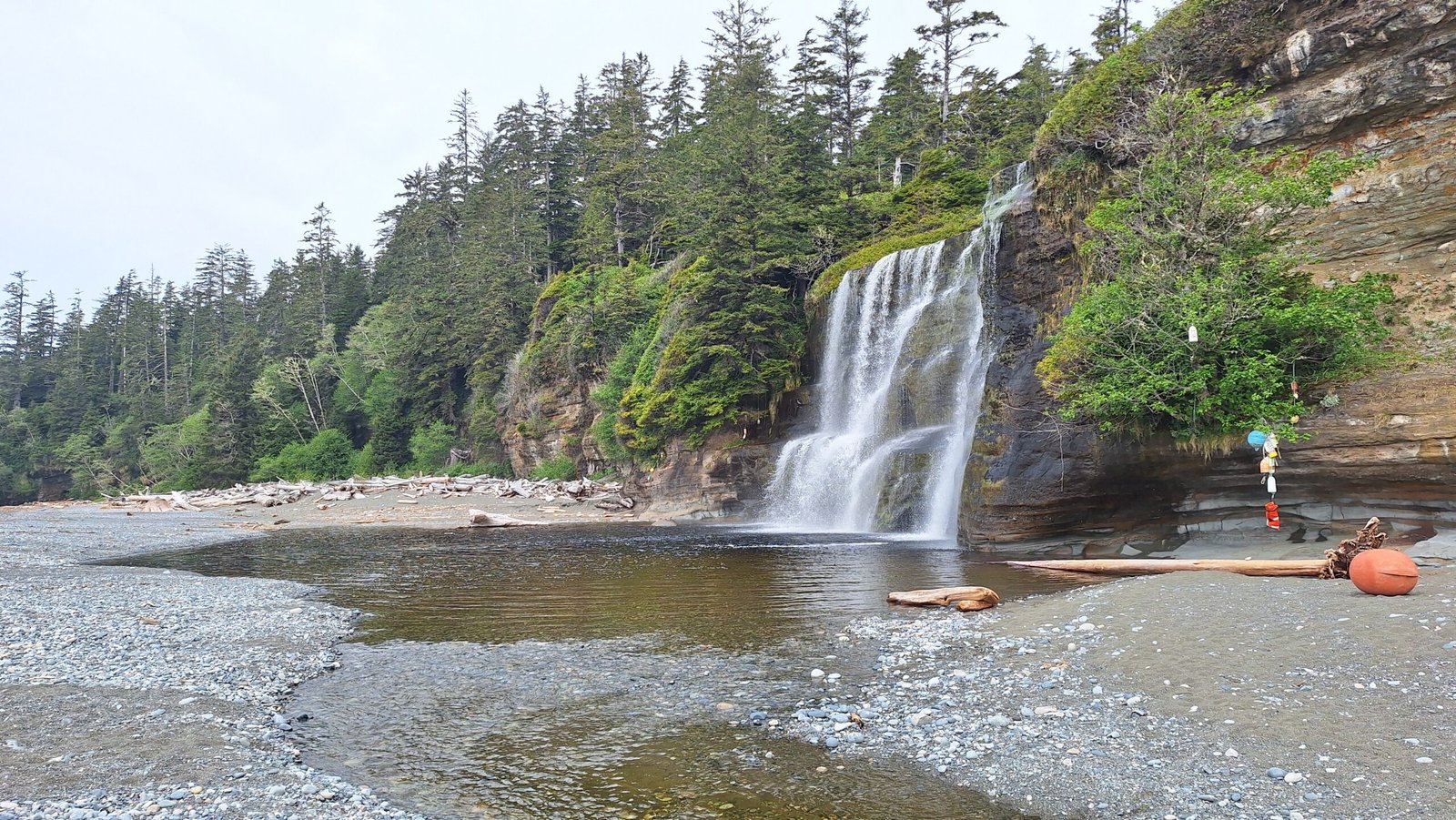

Excited to share another family post. Check out what’s new in Robin’s backpack for this year’s West Coast Trail trip.
Gearing Up for the West Coast Trail: Three New Additions to My Pack This Year
There’s something about preparing for the West Coast Trail that feels almost as exciting as hiking it. The planning, the food packing, the gear testing, and the constant balancing act between comfort and weight all become part of the adventure long before your boots hit the trail.
Every year, I seem to tweak something in my pack setup. Sometimes it’s because gear fails. Sometimes it’s because I’m chasing a little more comfort after a long day of ladders, mud, and beach hiking. And sometimes it’s because backpacking gear keeps evolving in ways that make life in the backcountry noticeably better.
This year, I added three new items to my West Coast Trail setup that I’m genuinely excited about testing over multiple nights on trail. They all fall into a category I care more about these days: practical comfort that still respects pack weight. This year my pack weighed in at 55 pounds (all in with food and equipment).


1. A Sleeping Pad That Might Finally Keep Me On the Mat
One of the biggest upgrades to my pack this year is the Big Agnes Rapide SL Insulated Sleeping Pad.
I went with the regular wide version, measuring 25” x 72”, and I already suspect this may be one of those pieces of gear that permanently changes my backpacking setup.
If you’ve ever spent nights sliding off a narrow sleeping pad while camping on uneven ground, you’ll immediately understand why I was interested in this one. The two outer rails are slightly raised, which helps keep you centered on the mat instead of slowly drifting off during the night. It sounds like a small feature, but after multiple nights in a tent, sleep quality becomes incredibly important. And sleep on the West Coast Trail matters more than people often realize.
This trail is physically demanding. Between the ladders, slippery roots, cable cars, tidal timing, and long hiking days with a heavy pack, your body takes a beating. Poor sleep compounds that quickly. A better recovery overnight can genuinely change your energy levels and enjoyment the next day.
What impressed me most immediately was the balance between comfort, insulation, and packability. Despite offering a solid insulation value, the packed size is surprisingly compact — roughly the size of a Nalgene bottle. That’s impressive considering the comfort upgrade over many older backpacking pads.
There’s always tension when packing for a trip like the West Coast Trail:
- Do you prioritize comfort?
- Do you prioritize weight?
- Or do you accept discomfort to save space?
Some gear forces you to choose one. This pad feels like one of the few options that hits a really smart middle ground.
I also intentionally chose the wide version. A lot of backpackers default to narrow pads to shave ounces, but for me, the extra width is worth every gram if it means better sleep and fewer restless nights. Especially on multi-day hikes, recovery is part of performance. I loved the upgrade and had a great sleep on the trip.
2. The “Luxury” Item I Didn’t Think I Needed
The second addition this year is the Big Agnes MtnGLO Pump & Light.
And honestly? This falls firmly into the “luxury backpacking item” category. But I already love it.
Inflating sleeping pads manually at the end of a long hiking day is one of those small tasks that somehow always feels more annoying when you’re cold, tired, damp, or setting up camp late. This little pump removes that hassle completely.
It inflates the sleeping pad quickly and doubles as a camp light, which is especially appealing for those inevitable late arrivals into camp after slower trail sections or tidal waits.
The West Coast Trail has a way of making even simple camp setups feel exhausting by the end of the day. Anything that reduces friction at camp starts to feel increasingly valuable after several days on trail.
The funny part? Two of my hiking partners immediately decided they now want one too (after I pumped up their mats for them after a late night into camp). That’s usually a sign a piece of gear is genuinely useful.
I did run into one issue: the light accidentally turned on in my bag and drained the battery. That’s definitely something I’ll need to pay attention to before heading into the backcountry. Gear that relies on battery life always introduces a layer of management and potential failure points.
Still, even with that downside, I can already tell this is one of those “small comfort, big morale boost” items.
And morale matters more in backpacking than people admit.
When you’re wet, sore, and tired after a full day on the trail, little conveniences suddenly feel enormous.
3. Testing a New Flextail Battery Pack
The third addition to my pack this year is a new Flextail power bank.
This one is still very much in the testing phase for me, but there are already a few things I like about it.
First, it’s lightweight and feels durable, which are two qualities that immediately matter for backpacking gear. Anything going into a pack for the West Coast Trail needs to survive moisture, repeated packing and unpacking, and inevitable rough handling.
I also really like the slow charging option. In the backcountry, power management becomes important quickly, especially on longer trips where every bit of battery conservation matters. Having the option to slow charge devices to preserve power feels like a thoughtful feature rather than just another marketing gimmick.
Another small but practical detail: the charging cable is stored directly with the battery pack itself. That sounds minor until you’re digging through your pack at night trying to find cords in a tent.
The biggest limitation for me was that it only has USB-C charging ports. Older gear that still relies on USB-A compatibility could create issues unless you bring adapters or updated cables (both my watch and headlamp fell into this category). I’ll make sure I have an adapter for my next trip.
That’s one of the realities of modern backpacking gear right now: technology is evolving faster than most people replace all their equipment. One new piece of gear often creates compatibility issues somewhere else in your setup.
Because battery performance claims always sound impressive at home. The backcountry is where the real test happens.
Using a single charger, I was able to charge my phone twice on eco mode and top up the charge on my mattress pump. This used all four bars of charge on a single Flextail charger.


Final Thoughts From the Trail
One thing I’ve learned over years of backpacking is that good gear doesn’t necessarily mean buying the lightest or most expensive option. It means finding equipment that improves your overall trail experience enough to justify carrying it.
The West Coast Trail has a way of exposing weaknesses in gear very quickly. If something is uncomfortable, inefficient, unreliable, or poorly designed, you’ll know within the first day.
That’s part of why gear selection becomes so personal among backpackers. Everyone eventually learns where they’re willing to carry extra weight and where they’re not.
For me, sleep quality and camp efficiency are becoming increasingly important priorities. A better recovery overnight often matters more than shaving a few ounces from my pack.
These three additions all reflect that shift:
- Better sleep
- Easier camp setup
- Smarter power management
Did all three earn permanent spots in future backpacking trips? Time will tell.
But right now, they feel like smart additions for a challenging multi-day adventure like the West Coast Trail.
And if they help make those long beach walks, muddy sections, and ladder climbs just a little more enjoyable after a better night’s sleep, they’ll absolutely be worth carrying.
For more on backcountry camping check out these posts.


You must be logged in to post a comment.