
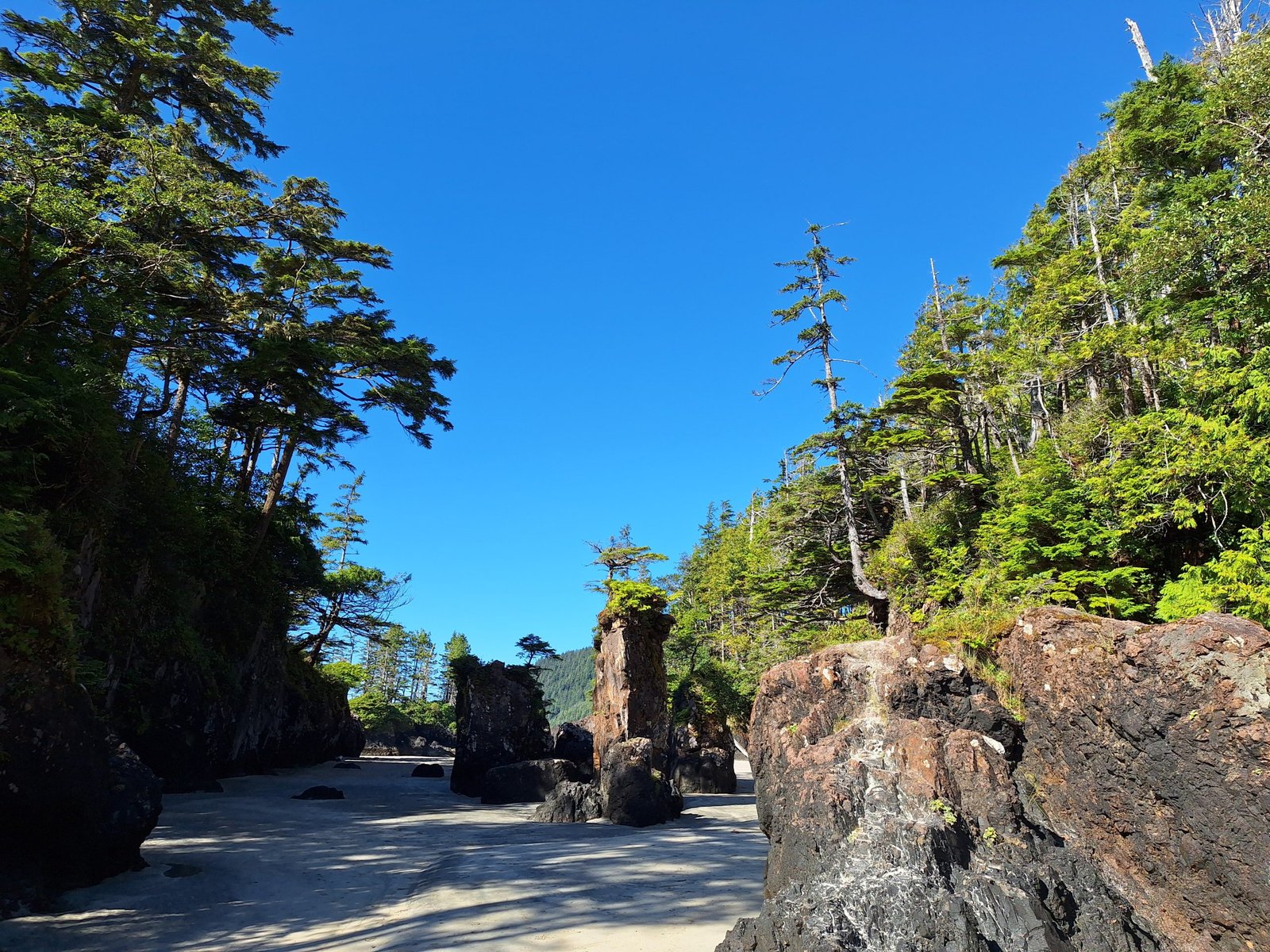

San Josef Bay: The Most Beautiful Backcountry Camping Spot on Northern Vancouver Island
There are places you visit once and never forget — and then there are the places you return to, year after year, because they hold something truly magical. For our family, that place is San Josef Bay on the Cape Scott Trail at the very northern tip of Vancouver Island.
For the last two summers, we’ve made the journey north, laced up our hiking boots, and walked the short trail into San Josef. No matter how many times we return, the moment the forest opens up to that wide expanse of sand, sculpted sea stacks, and sparkling Pacific waves, it still feels like we’re seeing it for the first time.
For those curious about dipping a toe into backcountry camping, San Josef Bay is a great place to start. With only a 45-minute hike from the trailhead, it’s perfect for families, beginners, and anyone wanting a taste of the west coast without committing to a strenuous trek.
Getting There: The Journey to the Edge of the Island
Reaching San Josef Bay is part of the adventure. The bay lies within Cape Scott Provincial Park, located at the northernmost point of Vancouver Island. The drive alone is an experience — winding through dense forests, on logging roads, and tiny remote communities before finally reaching the trailhead. Located just outside of Port Hardy, down a well-kept logging road that takes about 90 minutes by car.
From the parking lot, the well-maintained San Josef Bay Trail takes you through lush rainforest. The walk is relatively easy, with flat terrain and wooden boardwalks, making it doable even with kids in tow. After about 45 minutes, you’ll hear the ocean before you see it — then suddenly, you step out onto one of the most stunning beaches in British Columbia.
Pro Tip: We spent the night in Port Hardy at the Kwa’lilas Hotel so that we could set off early the next morning for our trip to San Josef.


Why San Josef Bay is So Special
What makes San Josef Bay unforgettable isn’t just the setting — it’s the feeling.
- Fewer People, More Solitude: Because it’s tucked so far north, far fewer people make the trip here compared to beaches further south. On some visits, we’ve had entire stretches of sand nearly to ourselves.
- Sea Stacks & Caves: The bay is famous for its dramatic sandstone sea stacks rising out of the sand like natural sculptures. You can walk around them, explore the sea caves, and discover tide pools teeming with marine life.
- Golden Sands: Unlike many rocky West Coast beaches, San Josef offers long, sandy stretches perfect for walking barefoot, playing frisbee, or simply reading in the sunshine.
- Swimming & Sunshine: On warm summer days, a dip in the Pacific is refreshing. Emma always heads straight into the waves.
- Unplugged Time: With no cell service, it’s a place to disconnect fully, enjoy the ocean, and the simple joys of camping.
Backcountry Camping at San Josef Bay
Camping on the beach itself is an experience like no other. Imagine falling asleep to the sound of waves, waking up to the sun rising over the ocean, and having breakfast with your toes in the sand.
Backcountry camping comes with some unique planning. Here’s what to consider:
Drinking Water
- A freshwater stream flows into the bay at Second Beach, providing a reliable source of drinking water; however, this beach can only be accessed at low tide unless you make the steep mountain hike.
- Bring a water filter or purification tablets — never drink untreated water.
Food & Cooking
- Pack lightweight, easy-to-prepare meals. We usually bring pasta, rice dishes, oatmeal, and plenty of snacks. See our review of backpacking meal options.
- A portable camp stove is essential; fire bans are typically in effect in the summer months.
- Use the bear caches provided along the beach to store food and garbage. We use dry bags to carry our food – bears are present in the area.
Leave No Trace
Cape Scott is a fragile, wild environment. To keep it pristine:
- Pack out everything you bring in — every wrapper, every scrap.
- Use the designated outhouses rather than the forest.
- Camp only in designated zones on the beach to avoid damaging vegetation.
What to Bring
- Tent and sleeping gear (a good ground tarp is essential for beach camping).
- Lightweight stove and cookware.
- Tarp for sun/rain protection
- Plenty of layers — coastal weather can change quickly. We usually start and end the day with a lightweight jacket and touque, even during the summer.
- Swimwear, towel and sandals for the beach.
- Water filter and bottle.
- Headlamp for exploring caves at low tide.
- Camp chair – a lightweight camp chair made all the difference on our last trip, before that we sat on the beach all day.


Tips for First-Time Visitors
- Check Tides: Particularly if you are hoping to camp on Second Beach or need immediate access to freshwater.
- Arrive Early: There are two parking lots, and they fill up fast between campers and those visiting for a day trip.
- Pack Smart: Even though it’s only a short hike in, you’ll want to keep your load light and organised.
- Weather Awareness: Fog and rain can roll in unexpectedly. Always have waterproof gear.
- Give Backcountry Camping a Try: If you’re new to it, San Josef is the perfect introduction. The hike is short, the rewards are huge, and the sense of accomplishment is real.


Final Thoughts
If there’s one backcountry camping experience on Vancouver Island that belongs on your bucket list, it’s San Josef Bay. With its towering sea stacks, soft sands, hidden caves, and peaceful isolation, it feels like stepping into another world.
And the best part? You don’t need to be an expert hiker to reach it. Just 45 minutes from the trailhead, this magical spot is waiting for you to pitch your tent, soak up the sunshine, and fall asleep under the stars.
For our family, there’s no place quite like it — and I suspect once you’ve visited, you’ll feel the same.


You must be logged in to post a comment.