

Camping in Beautiful North Vancouver Island: Ultimate 6-Day Road Trip
Experience a six-day outdoor adventure on the northern tip of Vancouver Island. Sleep under the stars, hike through the rainforest, and explore the towns and villages on the edge of the ocean.
Having lived on Vancouver Island for the majority of my life, and never having travelled north of Campbell River, I wanted to set aside some time for our family to explore the other northern half of the island. After seeing pictures and hearing how beautiful San Josef Bay was from a friend, we planned our trip around this stop and I went about looking for the best places to visit. The itinerary below reflects our learnings.
6-Day North Vancouver Island Itinerary
Before You Go
Given north Vancouver Island’s remote, rugged nature it sees far less visitors than the rest of the island. Temperatures are a bit cooler and weather can change quickly with more frequent storms in the winter months. Given this, some places close for the winter season making the ideal time to visit between May and September.
Pro Tip: Many of the places you will want to visit in the north Island are accessed off unpaved gravel logging roads. We had no trouble in our SUV but you may want a vehicle with a higher clearance and 4×4. If you are renting a vehicle be sure to check whether it can be taken off-road.
Day 1: Head North
You will likely start your trip in either Victoria or Nanaimo, arriving by ferry or airplane, unless you are lucky enough to already live on Vancouver Island. We started out from Victoria and made our way to Alder Bay by dinner. Google Maps said it would take us five and half hours, but it took us closer to seven with traffic. The highway makes for an easy drive with lots of pretty spots to stop along the way. As you make your way north, Campbell River is the last larger city to gather groceries and supplies for your trip. It is also the end of reliable cell service.
There are a few different camping options between Port McNeill and Telegraph Cove. We landed on Alder Bay RV Park and Marina, which was a beautiful spot. It is a large open campground with few trees and lots of people who come up to fish and stay in their RVs during the summer months. There is a great little beach, forest paths and even a food truck selling fish and chips.
Pro Tip: Be sure to have your route planned and download maps before you loose cell service north of Campbell River.


Day 2: Telegraph Cove, Port McNeill and Alert Bay
Check out one of the most picturesque villages with a trip to Telegraph Cove. Walk along the wharf and take in all of the fishing boats, the historic cabins and stop for a snack at the bakery. There is a small fee for parking in the lot across the street from the General Store. This is a great place to take a whale watching tour from or head out on a kayak trip. There is even a full day grizzly bear tour that leaves daily and lots of options if you like to fish.
Make your way about 30 minutes by car to Port McNeill, an eco-tourism hub for all things outdoors. If you have time, catch the ferry over to the village of Alert Bay, located on Cormorant Island for the afternoon. The ferry runs several times a day and takes about 40 minutes. Enjoy the boardwalk that connects to the cultural centre and take in some of the local First Nations art as you explore.


Day 3-4: San Josef Bay in Cape Scott Park
This will be one of the highlights of your trip. Two hours from Port McNeill, about an hour and a half of which will be on logging roads, you will find the trailhead for Cape Scott Park. The active logging road will include a drive through the small logging community of Holberg and the most remote pub on Vancouver Island. Be sure to download maps before setting out as there is no cell service in this very remote region. Parking is free at an upper and lower lot, however, these parking lots service the entire Cape Scott Park and have a steady stream of cars in and out in the summer months. Backcountry camping can be paid in cash at the trailhead or in advance online ($10/adult, $5/child under 15 per night). There are several different multi-day hiking options available from the trailhead, although we heard repeatedly that San Josef Bay was the favoured camping spot. For more on backcountry camping, check out this blog post.
Pro Tip: Be sure to read any notices at the trailhead. Postings on closures, trail conditions, and wildlife sightings will be listed.


The walk into San Josef is about 40 minutes (~2.5 km) on a well maintained easy path. Many families pull wagons with their extra supplies or make use of the wheel barrows at the trailhead. Others chose to visit for a day trip and carry just what they need for the day. There is an outhouse and picnic tables at the trailhead and bear caches and outhouses throughout the park. About a kilometer into the walk there is a sign post marking the different trails throughout the park. I promise the journey to get there is part of the experience and if it was easier to access it would be overrun by visitors.
Pro Tip: Drinking water is not available at San Josef and must be packed in. Stream water for filtering can be found near Second Beach, however it can only be accessed at low tide. Pack in enough water for drinking and cooking or plan to hike back out to the car later in your stay.


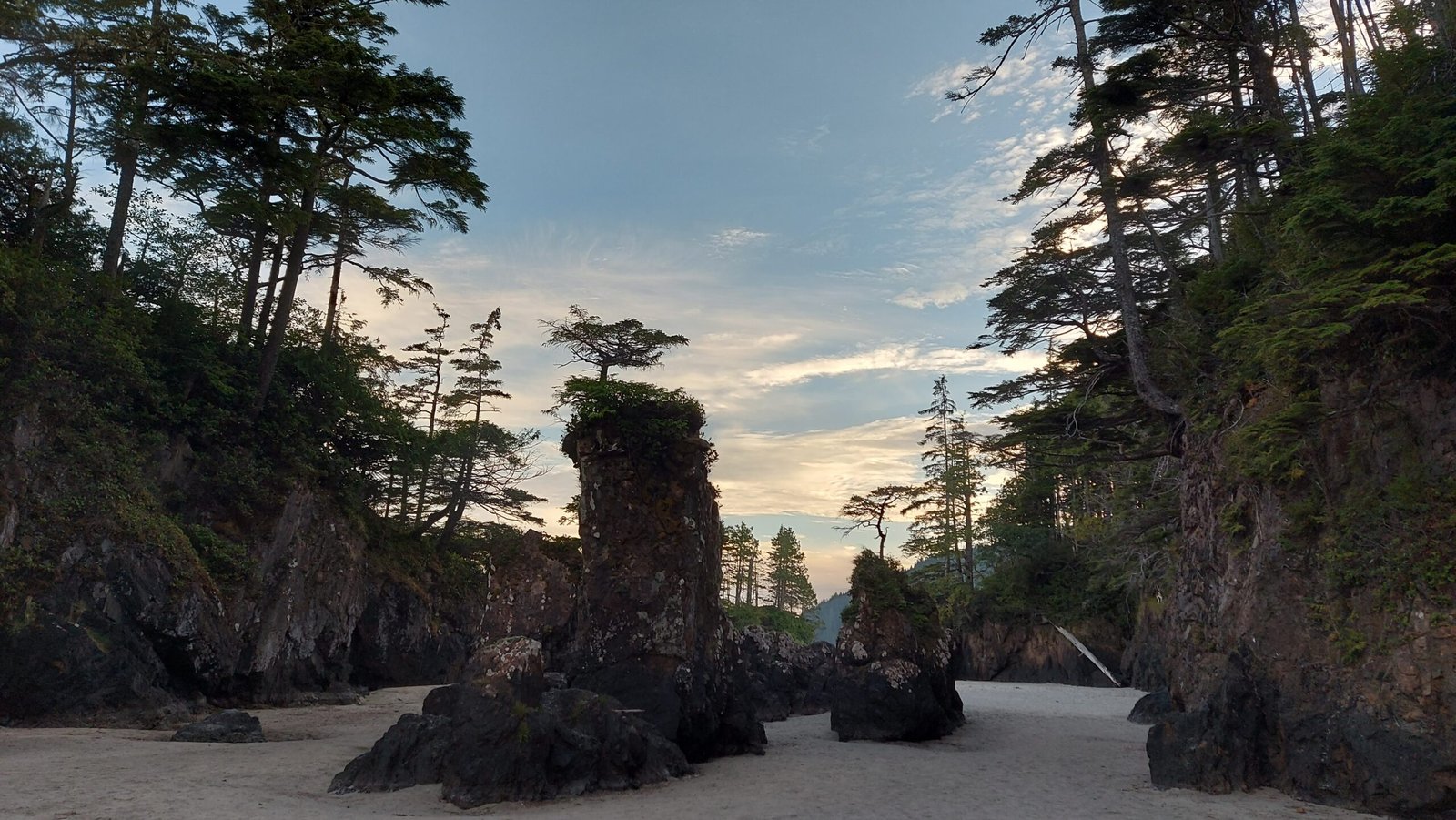
Once you reach the beach, you can choose any spot to camp. There are no designated spots. You will find tents lining the sand above the high tide line along San Josef Bay and people making their way slightly farther to camp at Second Beach (only accessible at low tide). The path is marked along the beach with buoys in the trees noting where you can find outhouses and bear caches and access to the main trail. At one end of the beach, the river meets the ocean, with good spots for fishing and swimming. At the other end of the beach, you will find sea stacks that have been carved from the ocean, leaving behind rocks, caves and a few trees. This is arguably the most beautiful west coast beach I’ve ever visited. With stunning views, soft, white sand, sea stacks and a quiet place to let the waves lull you to sleep, I’m already planning my next visit.
Pro Tip: Pack for all types of weather with lots of layers as it gets cool once the sun sets.
Pro Tip: Camp at San Josef Bay as it makes for a shorter walk with your gear along the sandy beach and is a great spot for exploring from.


Day 5: Little Huson Caves and Elk Falls
As you hike out and get on the road in the morning, make your way south to Little Huson Falls, just under three hours by car from Cape Scott Park. The caves are accessed through a logging road that is not nearly as well maintained as the one to Cape Scott. Luckily you will only need to be on it for about 15 minutes after exiting Highway 19. Google Maps failed us on this one, directing us to a lower road, where there were no trails to be found. Instead follow the signs to the caves that are marked along the logging road and you will end up at a trailhead with a map and outhouse. From there you can walk about 10 minutes to the lookout to see the back of the caves or another few minutes further down to the caves. The trail was not well maintained when we visited and is quite steep at times. Explore the caves and go for a swim during the summer months. The water was surprisingly warm in August when we visited.
Pro Tip: Be sure to wear a bathing suit and water shoes or sandals.


Make your way another two hours south to Campbell River. We camped our final night at Elk Falls Provincial Park (Quinsam Campground), home to a suspension bridge, waterfall and some fantastic salmon fishing. If you’ve had enough camp food by now, try the pizza at Fratelli’s, it is fantastic.


Day 6: Travel Day
Pack up, have one last walk along the river before you make your way home or to your next adventure. You will undoubtedly be ready for a hot shower and your own bed.
Any do-overs?
If we had it to do again we would plan for three nights in San Josef as it was truly amazing and everyone’s favourite part of the trip. We didn’t realize we wouldn’t be able to access freshwater from San Josef Bay, so had to walk out for water on our second day. If we did this trip again we would bring in a cart with extra water.


